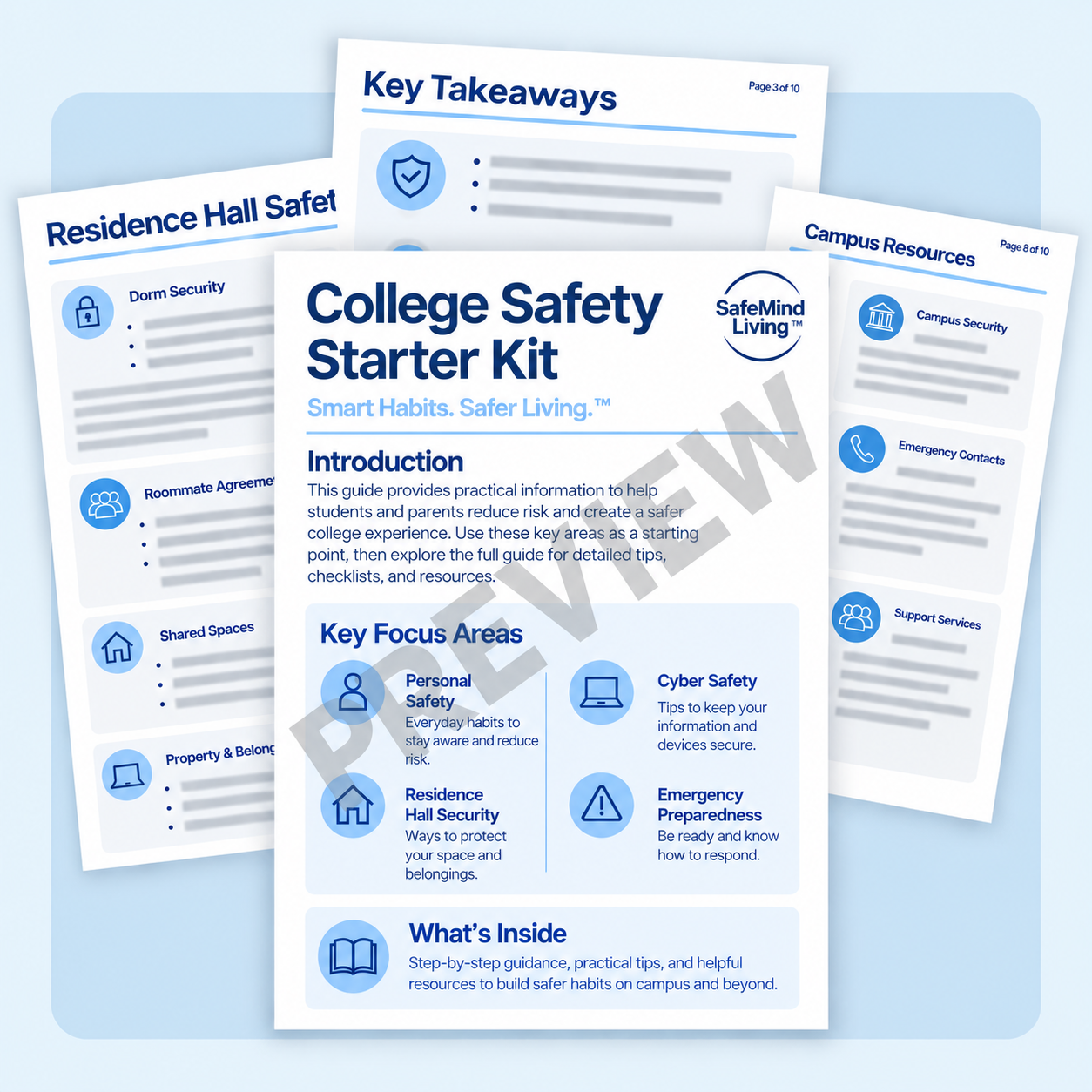
Starting college is an exciting transition, but students and families may also have new safety concerns. The College Safety Starter Kit offers reminders to help students build safer habits on campus and in residence halls, and is a starting point for conversations about safety.
This downloadable guide covers:
Personal safety when walking alone
Safer practices for social gatherings
Dorm and residence hall security
Fire safety basics
Roommate safety agreements
Online security and phishing awareness
Device protection and privacy settings
Emergency contacts and campus alerts
Suggestions for assembling an emergency kit
Key takeaways for students and parents
One downloadable PDF
Four pages
US Letter portrait format
Suitable for digital reading or printing
Designed for students, parents, and families preparing for college
This resource was created by the founder of SafeMind Living, whose experience surviving a random violent crime led to her commitment to safety education, risk reduction, and helping others make safer choices.
SafeMind Living™ | Smart Choices. Safer Living.™
This guide provides general educational information and is not a substitute for official campus policies, emergency services, or professional advice. Students should become familiar with their own college or university’s safety procedures and available resources.
Move-in day is loud, exciting, and a little overwhelming. The Move-In Safety Guide is a short, practical walkthrough of the small habits that make a dorm room or first apartment feel safe from day one. Read it once before you pack. Keep it on your phone after that.
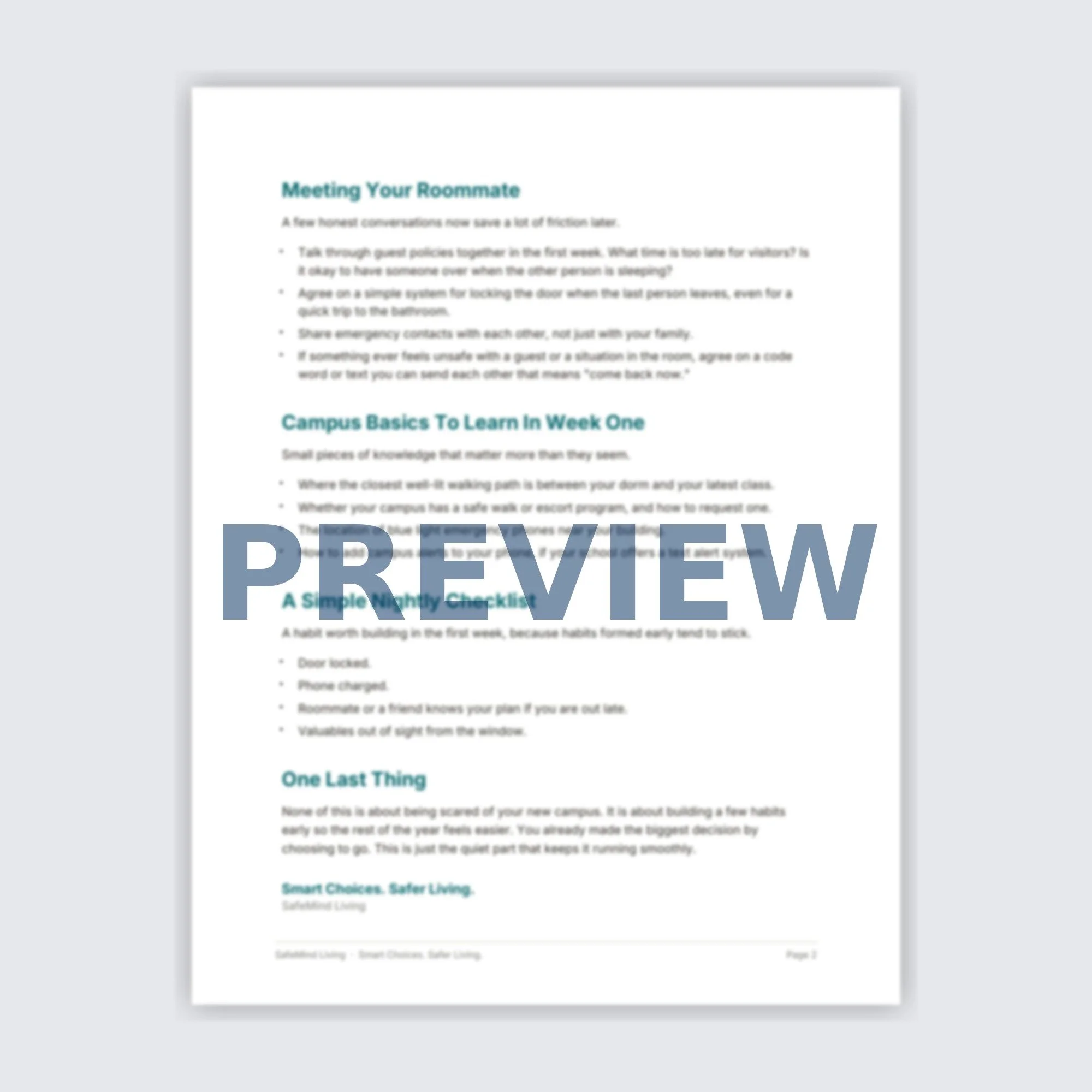
This 2-page mini book from SafeMind Living™ covers five areas:
- Before you pack: who gets your new address and move-in date, saving campus security's non-emergency number, photographing your IDs, and sharing your driving route if you travel alone.
- Setting up your room: testing the door lock on day one, a flashlight or battery you can find in the dark, fire exits, ground-floor window latches, and keeping your RA's number where you will see it.
- Meeting your roommate: guest policies, a lock-up system for when the last person leaves, shared emergency contacts, and a code word that means "come back now."
- Campus basics for week one: the well-lit walking path, safe walk or escort programs, blue light emergency phones, and campus alert texts.
- A simple nightly checklist: door locked, phone charged, someone knows your plan, valuables out of sight from the window.
Perfect for incoming freshmen, transfer students, first-time renters, and parents who want to send their student off prepared. This is not about worst-case scenarios. It is about building a few habits early so the rest of the year feels easier.
What you get:
- 2-page printable PDF mini book, written in plain language
- 5 sections: packing prep, room setup, roommate conversation, campus basics, nightly checklist
How it works: This is a digital download. No physical item will be shipped. You will receive a download link immediately after checkout.
Disclaimer: For informational and educational purposes only. SafeMind Living™ does not provide therapy, counseling, medical, or legal advice. For immediate danger or crisis support, call 911 or 988.
Smart Choices. Safer Living.™
Want to be Crime Wise? Follow SafeMind Living™.
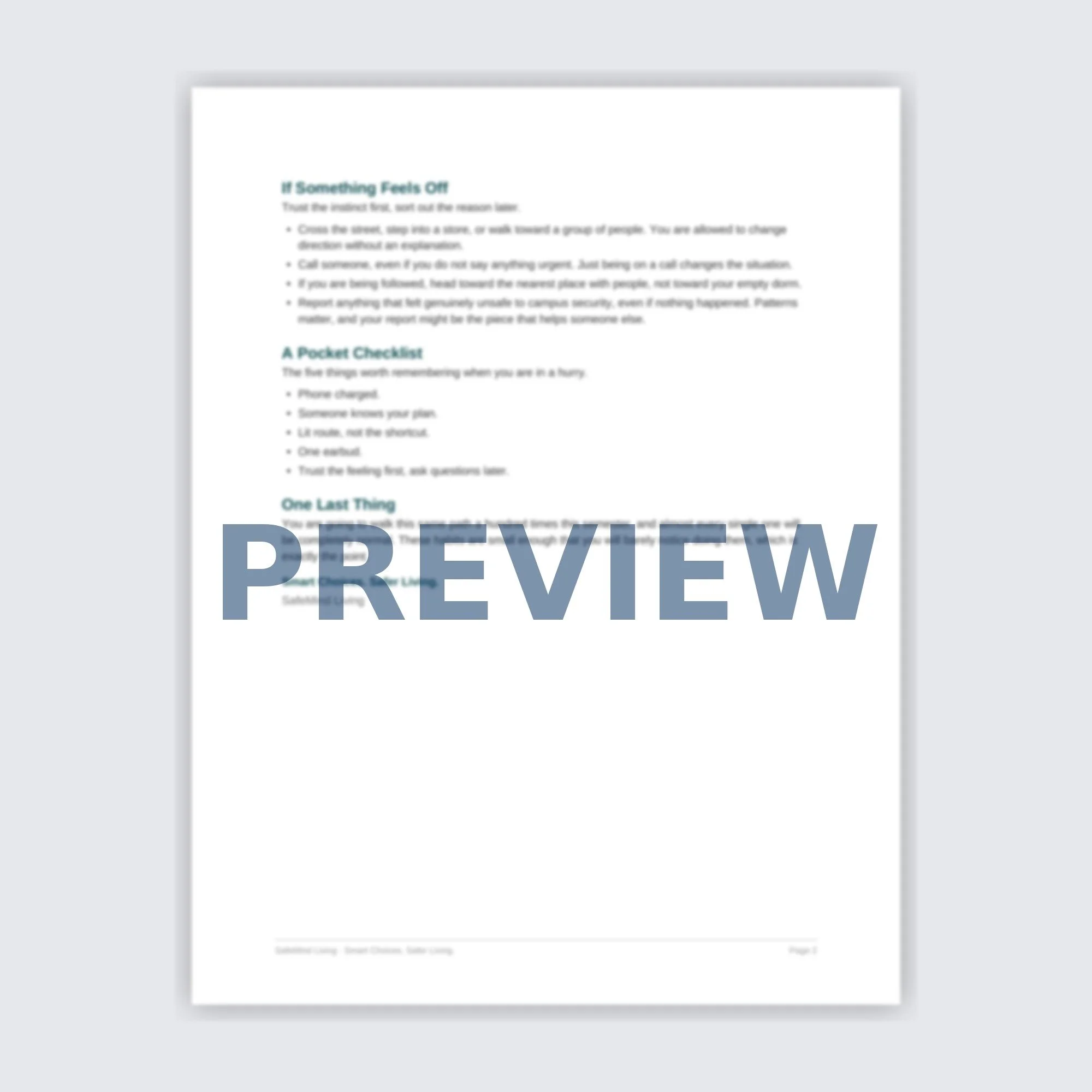
Most walks are completely uneventful. Walking Alone, Smart is a field guide for a normal part of life: a few habits that take no extra time but make every walk a little smarter, whether it is a two-minute trip to the library or a late walk back from a friend's place.
This 2-page field guide from SafeMind Living™ covers five areas:
- Before you head out: thirty seconds of prep. Phone battery check, the five-second text ("Walking to the library, back in 20"), the route you know instead of the shortcut, keys in hand before you reach the door.
- On the walk: one earbud instead of two, head up, lit paths even when the unlit one is shorter, and trusting the feeling that says take the long way.
- Rideshares and late rides: matching the plate and driver photo every time, saying the driver's name first, sharing the trip in the app, sitting in the back seat.
- If something feels off: changing direction without explanation, getting on a call, heading toward people instead of an empty dorm, and reporting what felt unsafe to campus security, because patterns matter.
- A pocket checklist: the five things worth remembering when you are in a hurry.
Perfect for college students, women walking to class or work, late-shift workers, and anyone who walks alone regularly.
What you get:
- 2-page printable PDF field guide, written in plain language
- 5 sections: before you head out, on the walk, rideshares and late rides, if something feels off, pocket checklist
How it works: This is a digital download. No physical item will be shipped. You will receive a download link immediately after checkout.
Disclaimer: For informational and educational purposes only. SafeMind Living™ does not provide therapy, counseling, medical, or legal advice. For immediate danger or crisis support, call 911 or 988.
Smart Choices. Safer Living.™
Want to be Crime Wise? Follow SafeMind Living™.
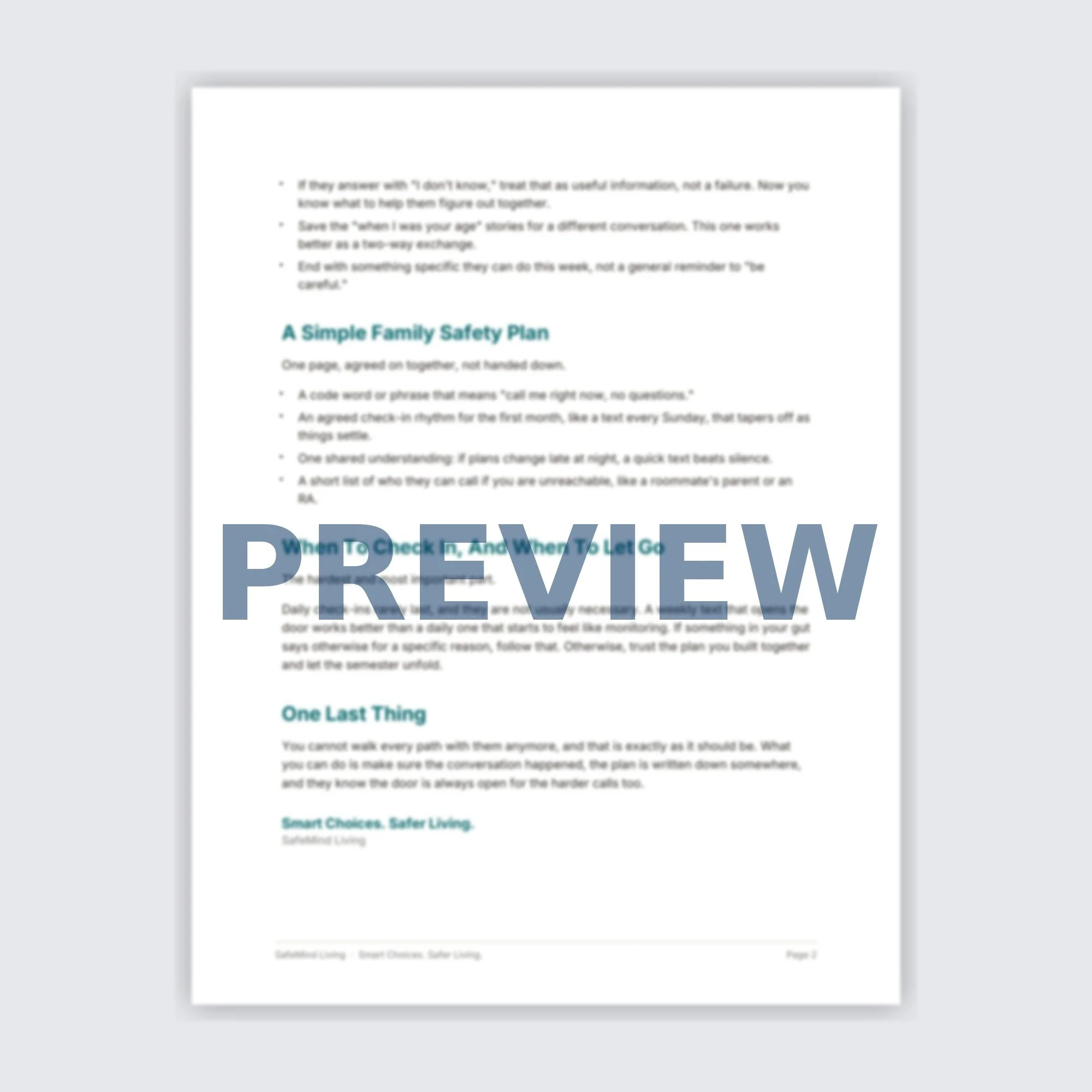
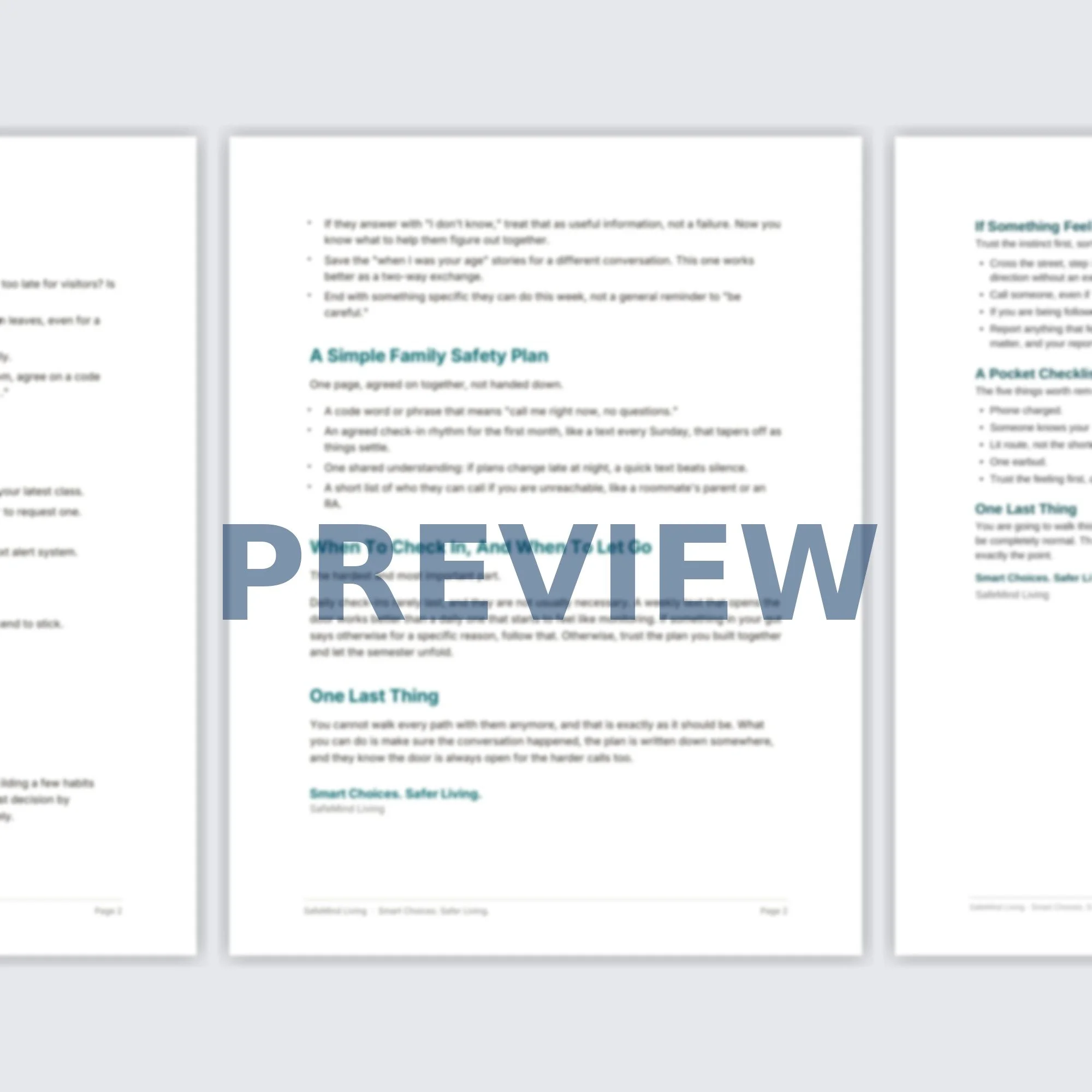
That first phone call from campus sets the tone for the whole semester. The First Call Home is a short guide for parents who want to talk about safety without turning every conversation into a lecture. It is built around a simple idea: your student will hear you better if they feel heard first.
This PDF guide from SafeMind Living™ covers five areas:
- Five questions worth asking: The conversation starters that open doors instead of shutting them. What a typical evening looks like, who they would call at 2 AM, how the campus alert system works, what their roommate situation really looks like, and what "I feel safe" means to them.
- Listening without lecturing: How to react when the answer worries you. The difference between "be careful" and "tell me more about that." Why calm curiosity gets you more information than rules ever will.
- The topics that matter most: Locking up, late nights, rideshares, drinking, and trusting instincts. A plain-language way to raise each one without a speech.
- Building a family safety plan together: Shared location settings, the family check-in rhythm, emergency contacts beyond mom and dad, and what to do if a call goes unanswered.
- When to call the school: Who to contact on campus if you are genuinely worried, and how FERPA works in plain English.
Perfect for parents of incoming freshmen, empty nesters, and families who want safety to be an ongoing conversation, not a one-time talk.
What you get:
- Printable PDF guide, written in plain language
- 5 sections: five questions, listening skills, key topics, family safety plan, contacting the school
How it works: This is a digital download. No physical item will be shipped. You will receive a download link immediately after checkout.
Disclaimer: For informational and educational purposes only. SafeMind Living™ does not provide therapy, counseling, medical, or legal advice. For immediate danger or crisis support, call 911 or 988.
Smart Choices. Safer Living.™
Want to be Crime Wise? Follow SafeMind Living™.
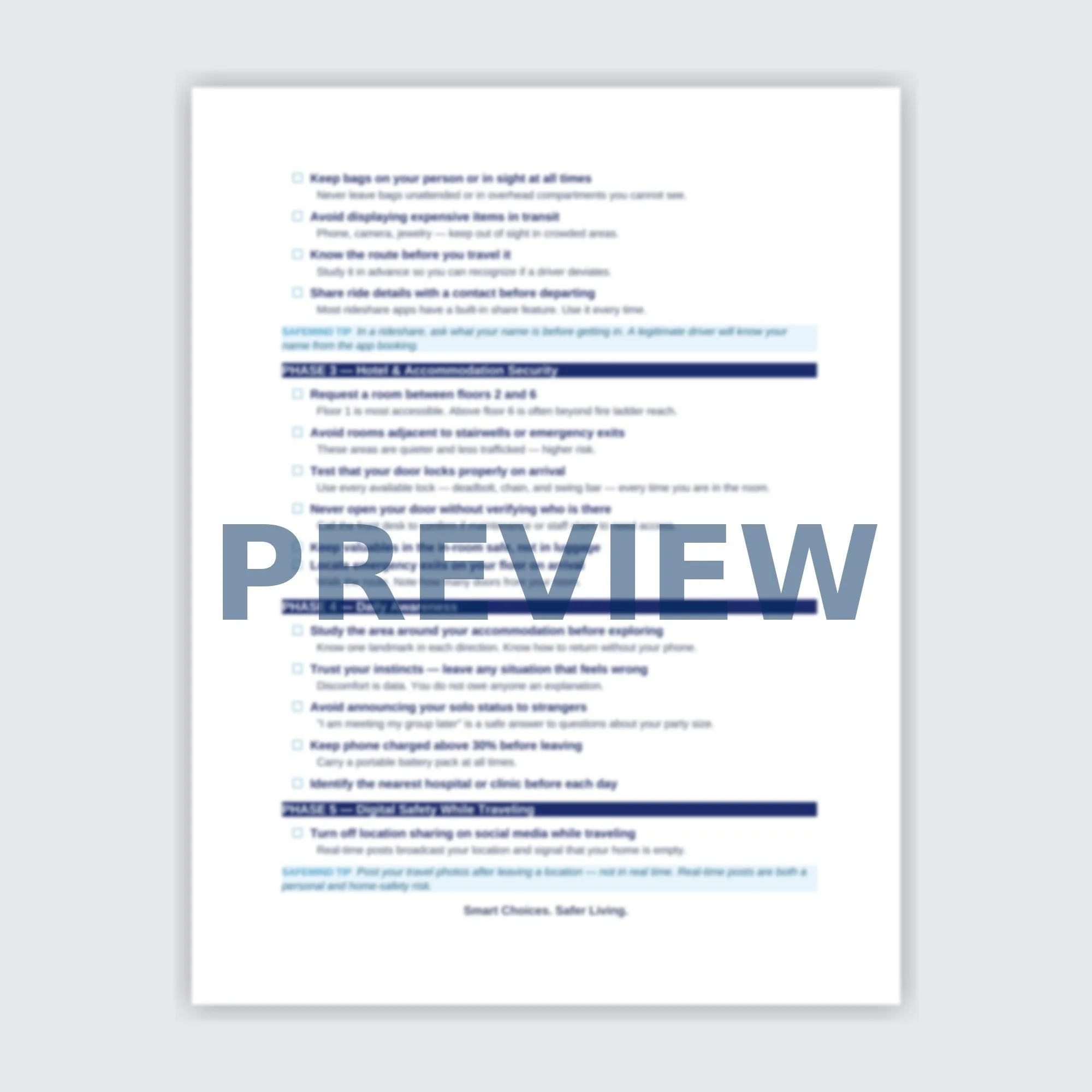
You don't need to live in fear. You just need a plan.
The SafeMind Solo Traveler Safety Guide walks you through every phase of a solo trip: before you leave, in transit, at your accommodation, and what to do if something goes wrong. Each phase is a working checklist you can check off as you go.
This guide from SafeMind Living covers five phases:
- Phase 1, Before You Leave: researching destination conditions, sharing your full itinerary, photographing documents to the cloud, connectivity plans, offline maps, travel insurance, and emergency cash stored separately.
- Phase 2, Transportation Safety: official taxis and verified rideshares only, confirming the plate and driver before you get in, keeping bags in sight, knowing the route in advance, and sharing every ride.
- Phase 3, Hotel and Accommodation Security: choosing your room location, testing the door lock on arrival, using every available lock, verifying visitors before opening the door, the in-room safe, and walking the emergency exit route.
- Phase 4, Daily Awareness: studying the area around your stay, trusting discomfort and leaving without explanation, phone charged above 30 percent, knowing the nearest hospital or clinic.
- Phase 5, Digital Safety: turning off location sharing on social media while traveling, and posting travel photos after leaving a location, not in real time.
Perfect for solo female travelers, business travelers, digital nomads, and anyone taking their first solo trip.
What you get:
- Printable PDF guide with five checkable phases and SafeMind tips throughout
How it works: This is a digital download. No physical item will be shipped. You will receive a download link immediately after checkout.
Disclaimer: For informational and educational purposes only. SafeMind Living™ does not provide therapy, counseling, medical, or legal advice. For immediate danger or crisis support, call 911 or 988.
Smart Choices. Safer Living.
Want to be Crime Wise? Follow SafeMind Living.
3 guides for college families, in 1 download.
Inside the bundle:
- The Move-In Safety Guide, $2.99 on its own. Room setup, roommate basics, campus habits, and a nightly checklist.
- Walking Alone, Smart, $2.99 on its own. Habits for walks, rideshares, and late rides, plus a digital checklist.
- The First Call Home, $2.99 on its own. 5 questions for parents, the topics that matter, and a family safety plan.
Bought on their own: $8.97. Bundle: $6.99. You save $1.98.
How it works: digital download. 3 PDFs in 1 ZIP file. Your download link arrives right after checkout. No physical item ships.
Disclaimer: For informational and educational purposes only. SafeMind Living™ does not provide therapy, counseling, medical, or legal advice. For immediate danger or crisis support, call 911 or 988.
Smart Choices. Safer Living.™
You can learn some important safeguards without being a tech expert.
This Digital Safety Checklist from SafeMind Living™ walks you through the updates that matter most: two-step login, passwords, device updates, backups, scam spotting, and what to do if something goes wrong.
Organized into 6 sections, each with SafeMind tips drawn from current guidance by CISA, the FTC, and the FBI.
Perfect for anyone who wants peace of mind for safer digital habits: parents, college students, older adults, and anyone who has ever wondered whether a call, text, or email was a scam.
What you get:
- 2-page printable PDF checklist, designed to be worked through section by section
- 6 sections: two-step login, passwords, devices and updates, backups, spot the scam, if something goes wrong
- 28 action items plus SafeMind safety tips
How it works: This is a digital download. No physical item will be shipped. You will receive a download link immediately after checkout.
Disclaimer: The information provided by SafeMind Living is for educational and informational purposes only. SafeMind Living LLC does not provide professional security, legal, medical, clinical, or emergency advice. Safety habits can reduce risk, but responsibility for criminal behavior always stays with the offender. For emergencies, call 911.
Want to be Crime Wise? Follow SafeMind Living™.


In 2025, Americans reported losing $929 million to confidence and romance fraud, and victims age 60 and older lost $584 million of that total. Romance Scam Red Flags™ is a clear, 2-page guide that shows exactly how these scams work, so you can spot the pattern early, for yourself or for someone you love.
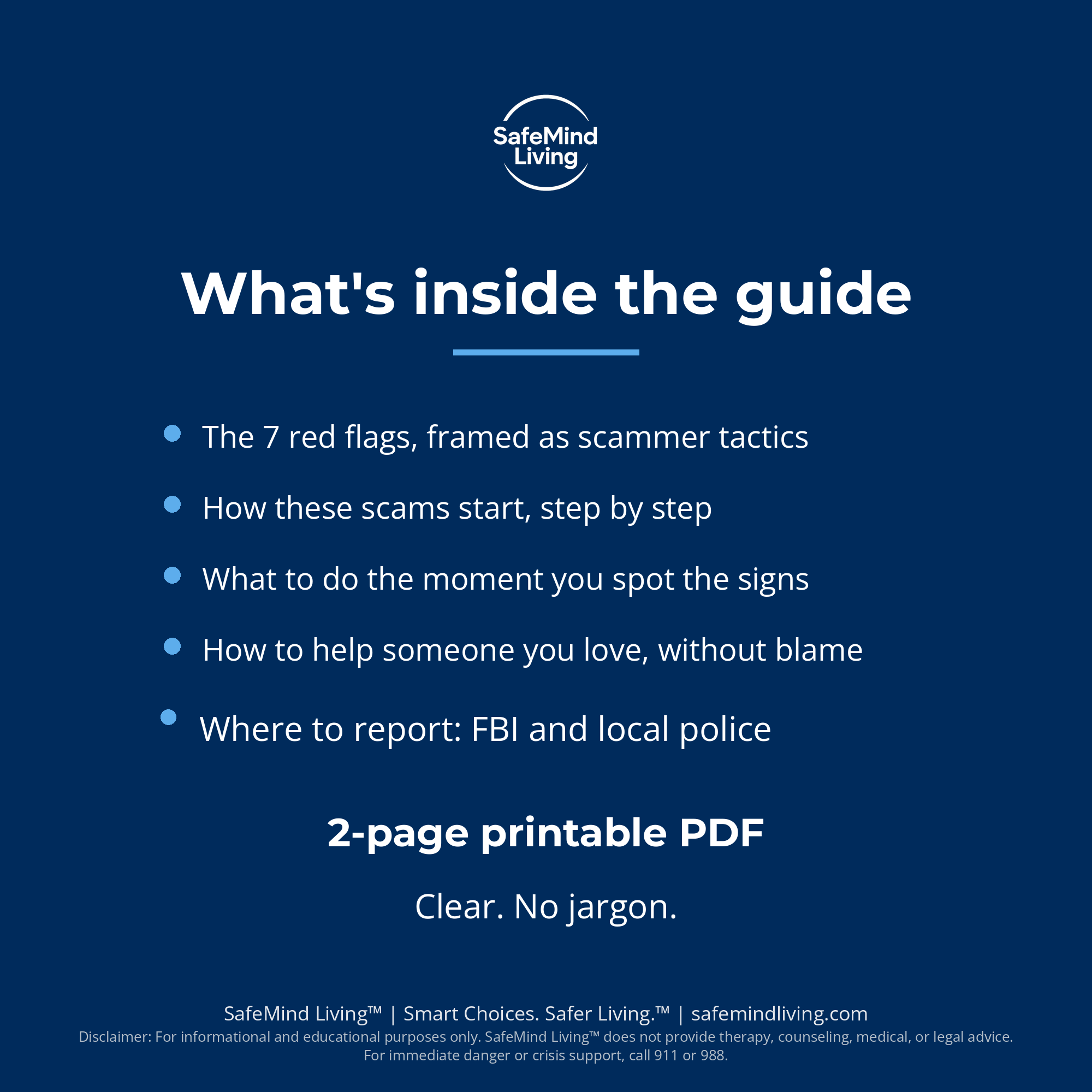
This printable PDF from SafeMind Living™ covers:
- The scale of the problem, with current FBI figures
- How these scams start: the opening moves scammers rely on
- The red flags, framed as scammer tactics, not victim mistakes: fast love, constant distance, moving off the platform, small asks before big ones, the emergency story, and the payment method that gives them away
- What to do when you spot the signs: slow down, reverse image search, the rule about not sending money to someone you have not met
- If it happened to someone you love: how to respond without blame, and how to help
- Where to report: FBI Internet Crime Complaint Center, local police, and the platform where contact started
For older adults, adult children looking out for a parent, caregivers, and anyone dating online.
WHAT YOU GET:
- 2-page printable PDF guide, written clearly
- Branded cover image for your files
HOW IT WORKS: After checkout, you get instant access to download the PDF. Print it, save it to your phone, or share it with a parent or friend who needs it.
Disclaimer: For informational and educational purposes only. SafeMind Living™ does not provide therapy, counseling, medical, or legal advice. For immediate danger or crisis support, call 911 or 988.
Disclaimer: The information provided by SafeMind Living is for educational and informational purposes only. SafeMind Living LLC does not provide professional security, legal, medical, clinical, or emergency advice. Safety habits can reduce risk, but responsibility for criminal behavior always stays with the offender. For emergencies, call 911.
Smart Choices. Safer Living.™
Walk through your home with a plan, not a worry.
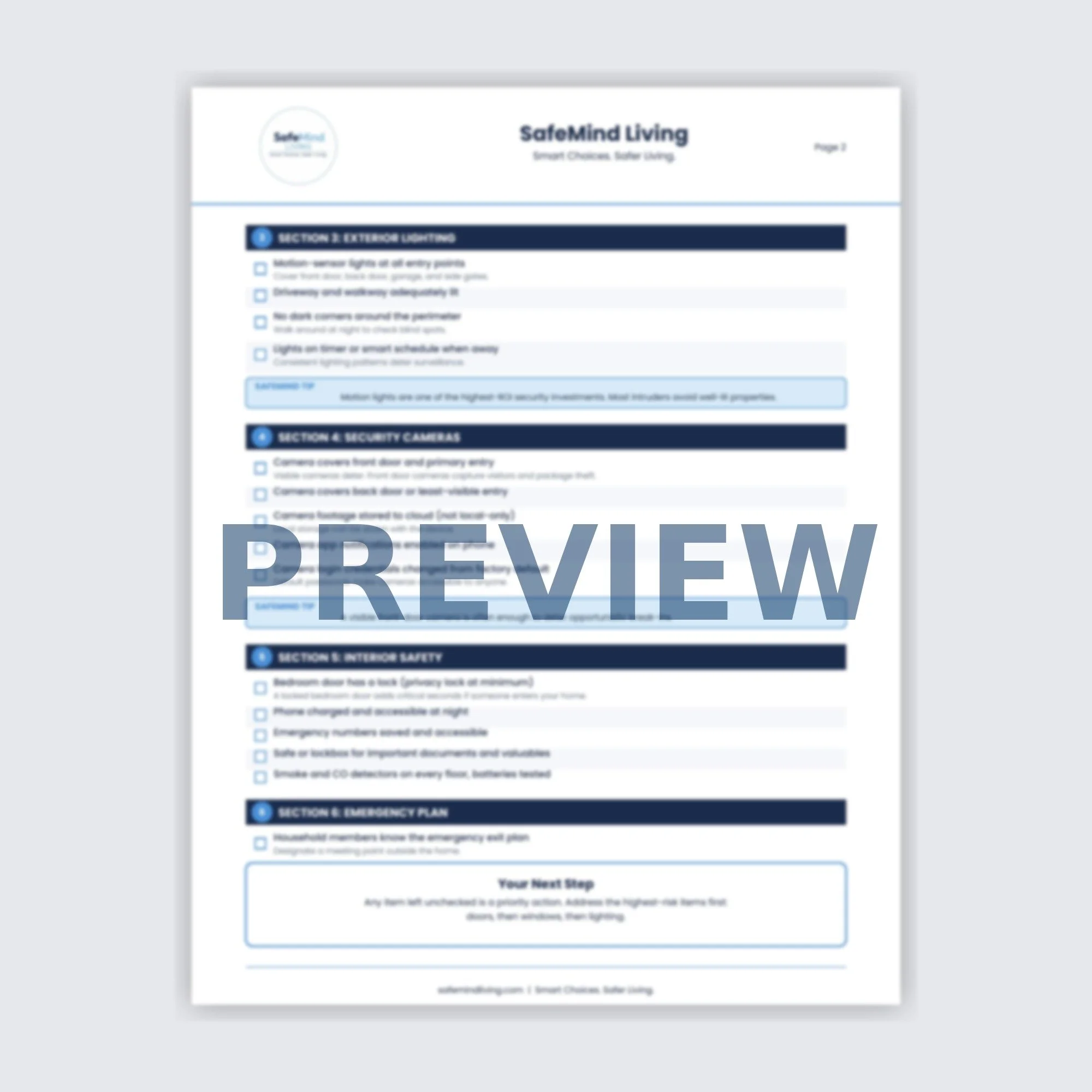
This room-by-room Home Security Checklist from SafeMind Living™ helps you spot weak points and fix them in order of priority. Work from your front door through every part of your home: entry points, windows, exterior lighting, security cameras, interior safety, and your household emergency plan. Each section uses plain language and includes SafeMind tips, including which low-cost upgrades give you the most protection for the money.
Perfect for new homeowners, renters, apartment dwellers, parents sending kids to their first place, and anyone who wants a calmer, more prepared home.
What you get:
2-page printable PDF checklist, designed to be worked through room by room
6 sections: front door and entry points, windows, exterior lighting, security cameras, interior safety, emergency plan
Practical SafeMind tips with real cost guidance (many fixes under $30)
How it works: This is a digital download. No physical item will be shipped. You will receive a download link immediately after checkout.
Disclaimer: For informational and educational purposes only. SafeMind Living™ does not provide therapy, counseling, medical, or legal advice. For immediate danger or crisis support, call 911 or 988.
Want to be Crime Wise? Follow SafeMind Living™.
Most breaches start with one click by one employee. This pack gives your team the habits that stop that click.
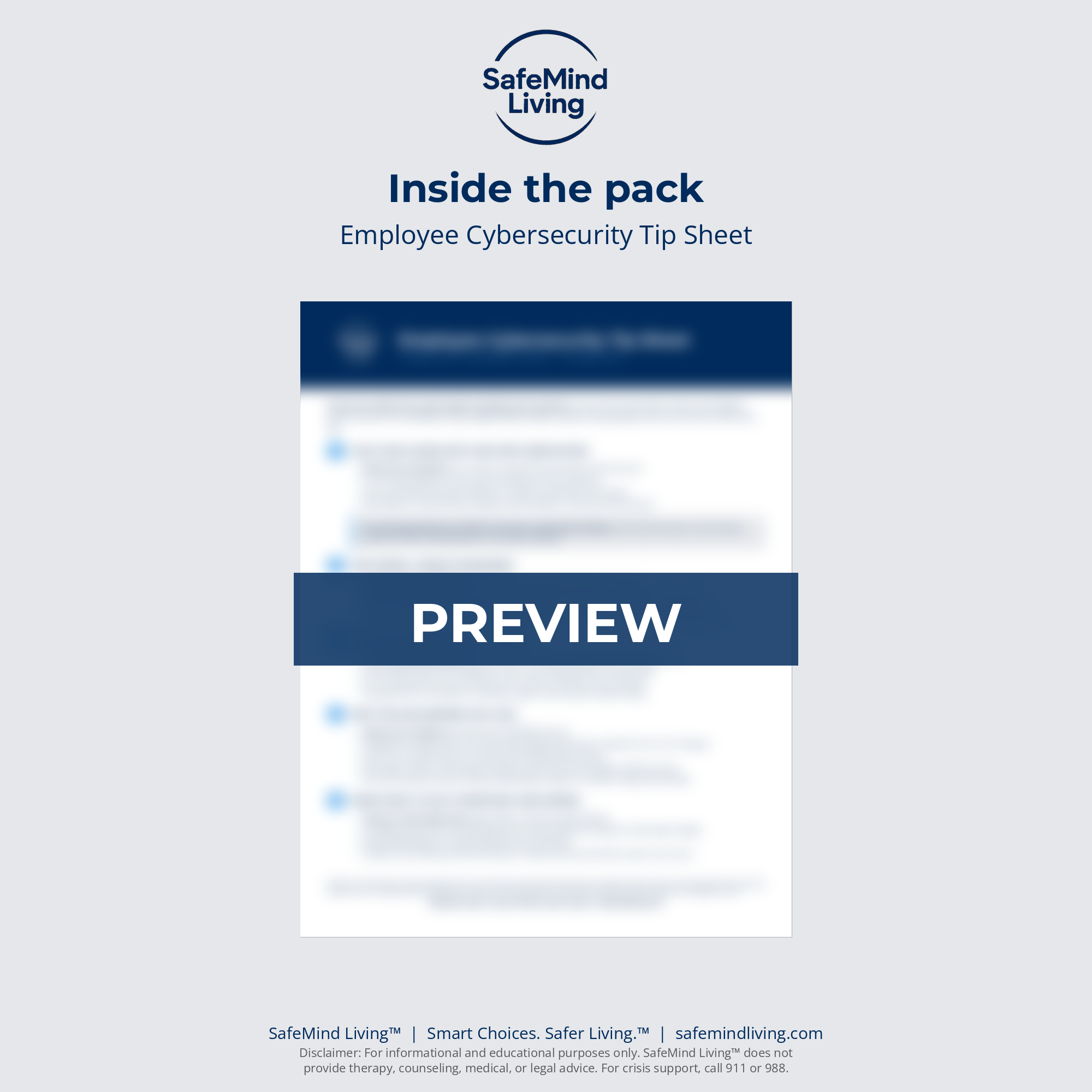
The Cybersecurity Employer Pack™ includes the Employee Cybersecurity Tip Sheet, a one-page, print-ready PDF written for employees. It covers passwords and two-factor sign-in, spotting phishing messages, safe links and attachments, device habits at work and at home, and what to do right away if something looks wrong.
Includes:
- Employee Cybersecurity Tip Sheet (1-page PDF, print-ready)
- Written for small and mid-size teams with no security department
- Print it, post it, or share it with your team
One purchase covers your company. Buy it once and share the tip sheet with your team.
Disclaimer: The information provided by SafeMind Living is for educational and informational purposes only. SafeMind Living LLC does not provide professional security, legal, medical, clinical, or emergency advice. Safety habits can reduce risk, but responsibility for criminal behavior always stays with the offender. For emergencies, call 911.
Smart Choices. Safer Living.™
Want to be Crime Wise? Follow SafeMind Living™.
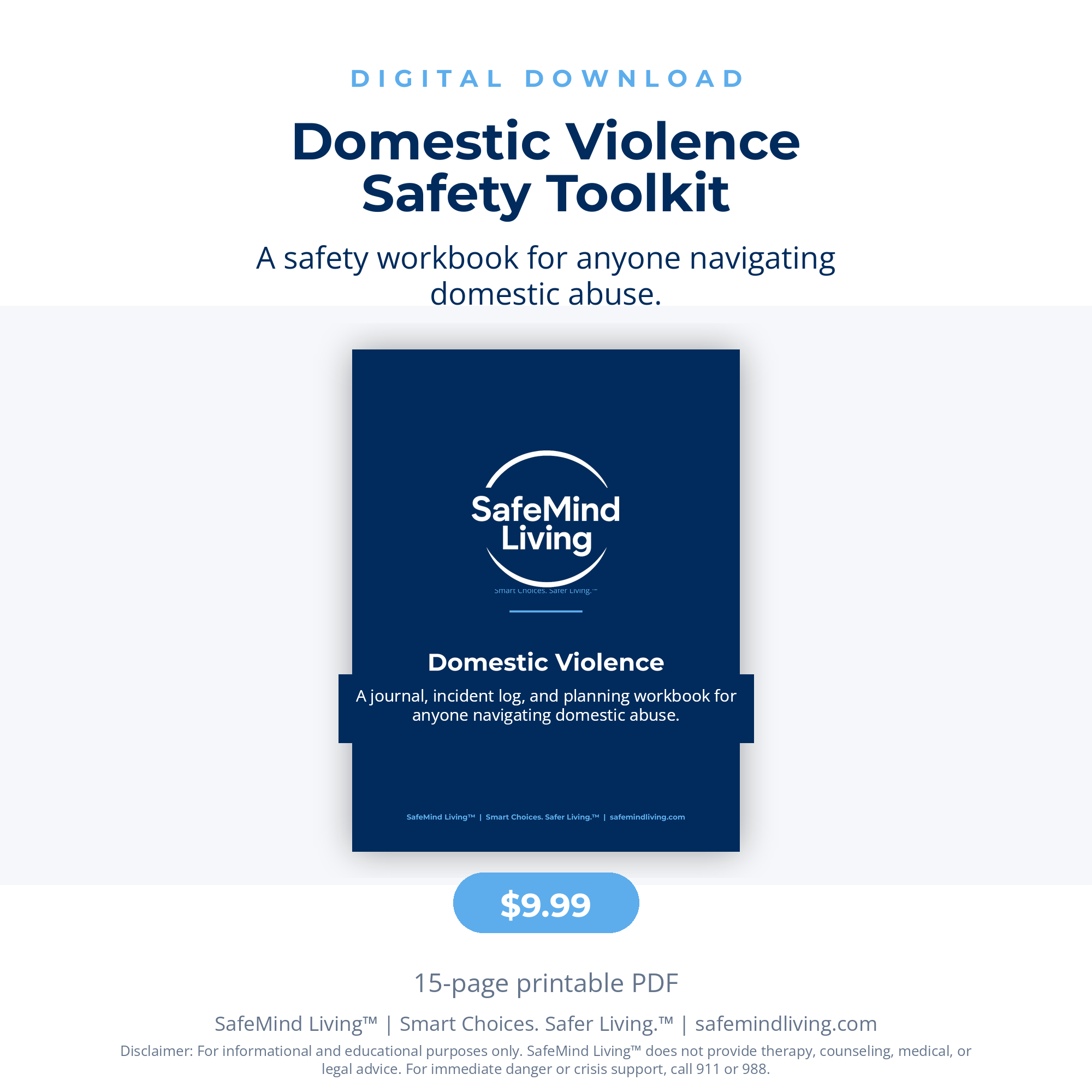
A safety workbook for anyone navigating domestic abuse.
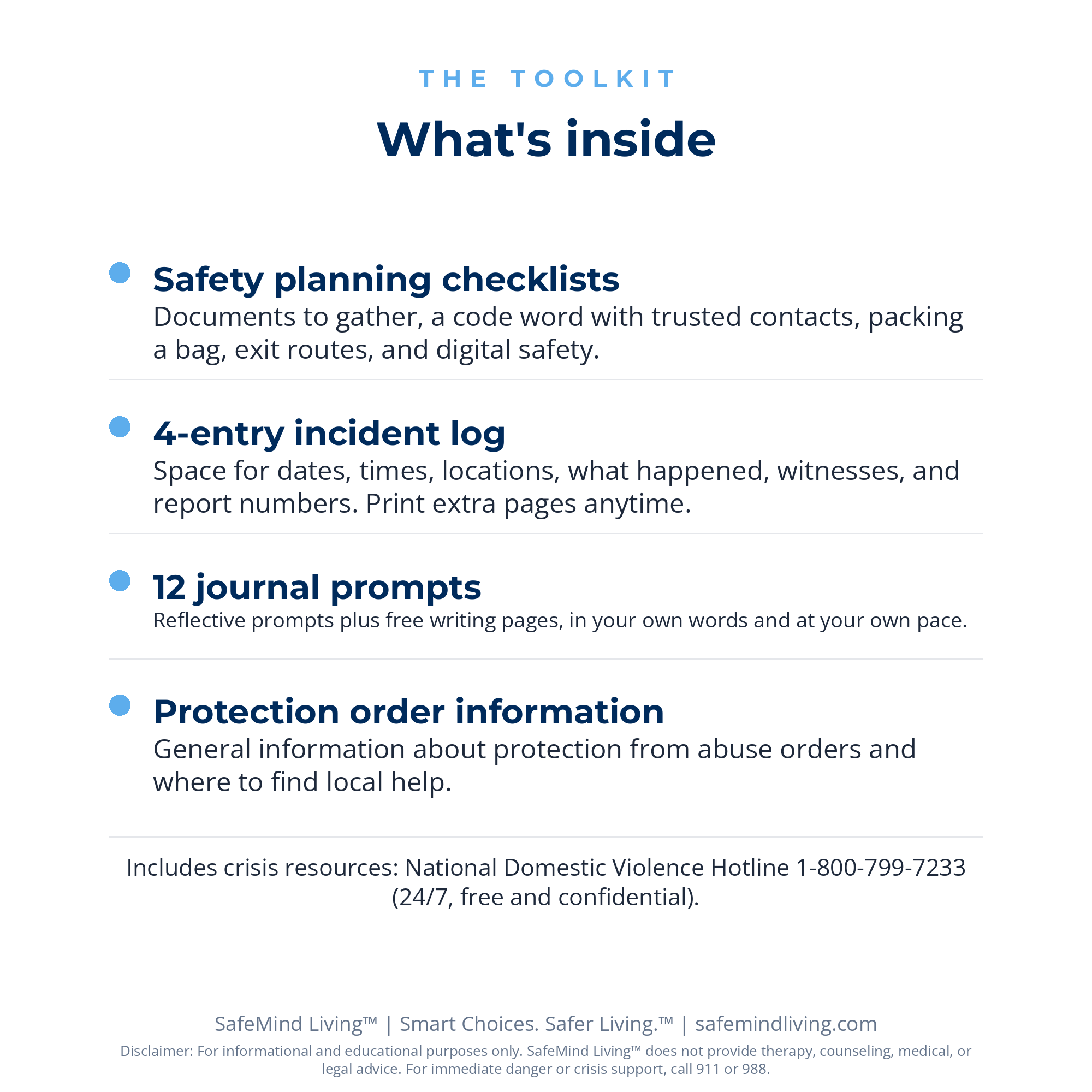
This printable toolkit brings together the planning pages many people wish they had in one place:
- Safety planning checklists: important documents to gather, a code word with trusted contacts, packing an emergency bag, thinking through exit routes, and digital safety (location sharing, passwords, shared accounts, spyware awareness)
- A 4-entry incident log with fields for date, time, location, what happened, witnesses, injuries, photos and evidence notes, and police report numbers
- 12 reflective journal prompts plus free writing pages
- General information about protection from abuse orders, including how rules vary by state and where to find local help
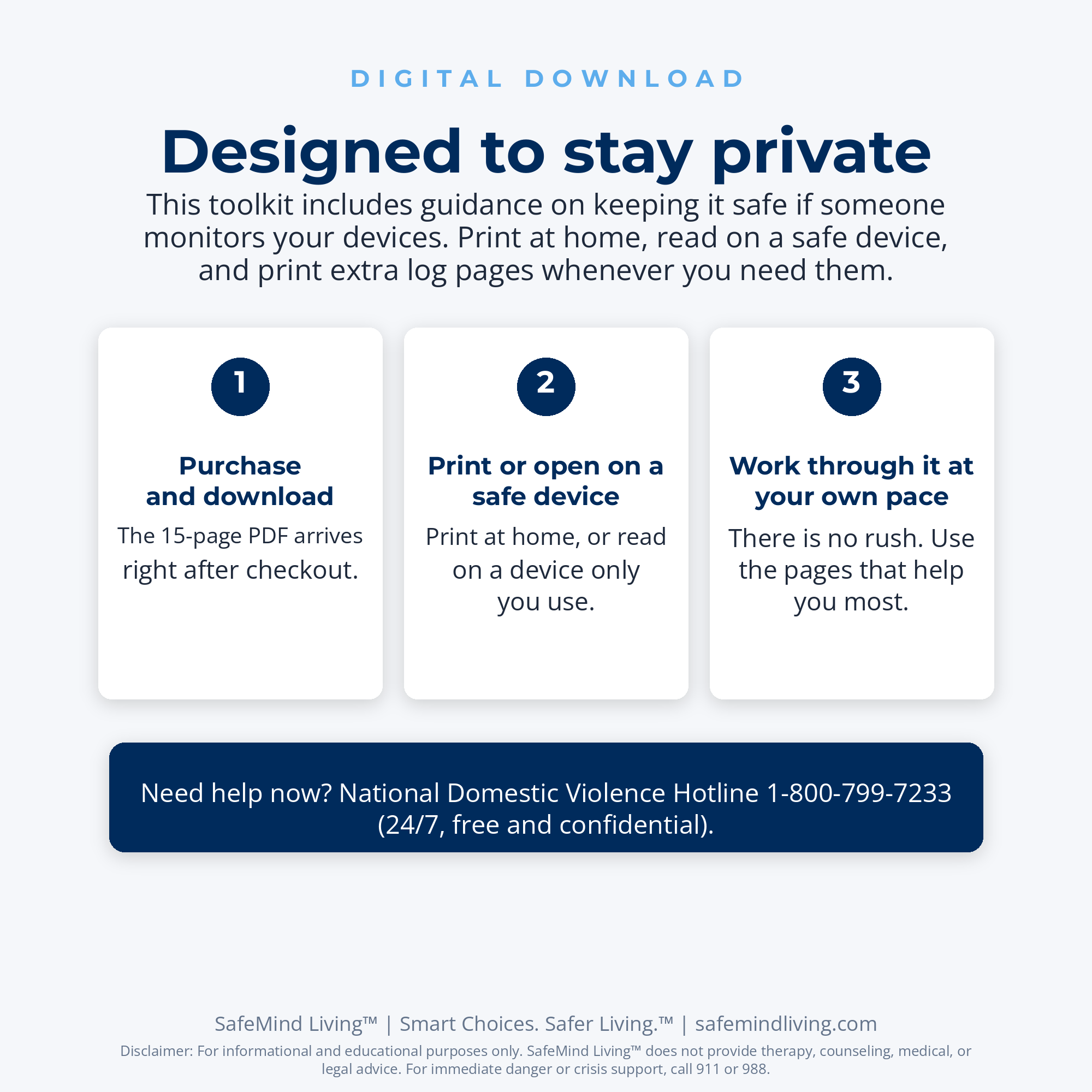
- Guidance on keeping the toolkit itself safe if someone monitors your devices
- Crisis resources: National Domestic Violence Hotline 1-800-799-7233, text START to 88788, 911 for immediate danger, 988 for crisis support
15-page PDF, US Letter size, print at home or read on a safe device. Print extra incident log pages any time you need them.
This is a digital download. You will receive a PDF file. Nothing will be shipped to you.
Disclaimer: The information provided by SafeMind Living is for educational and informational purposes only. SafeMind Living LLC does not provide professional security, legal, medical, clinical, or emergency advice. Safety habits can reduce risk, but responsibility for criminal behavior always stays with the offender. For emergencies, call 911.
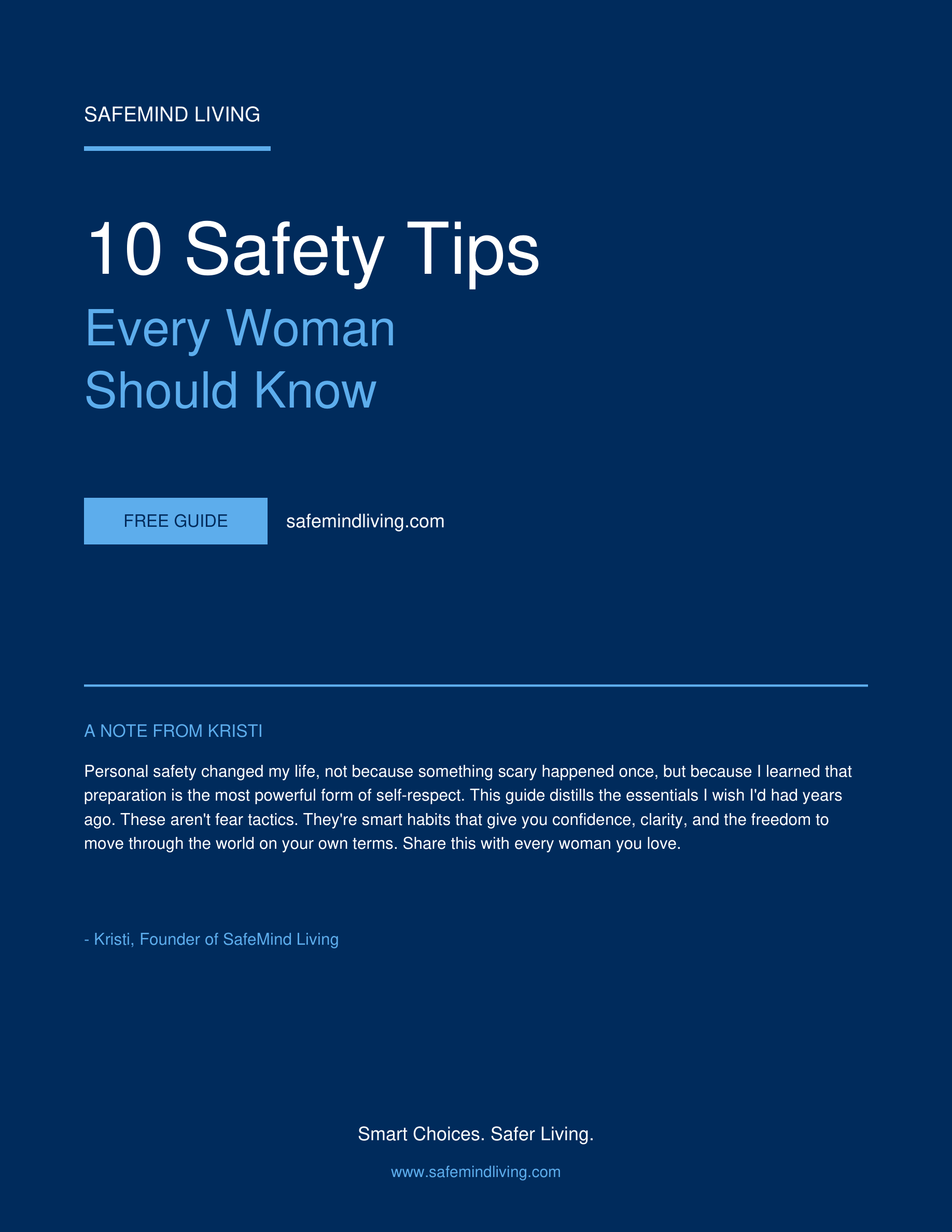
Start living safer today with 10 practical safety tips from SafeMind Living.
This free guide covers simple habits that reduce risk in everyday life: at home, walking alone, traveling, and online. No fear tactics, just smart choices you can use starting today.
Smart Choices. Safer Living.
Disclaimer: For informational and educational purposes only. SafeMind Living™ does not provide therapy, counseling, medical, or legal advice. For immediate danger or crisis support, call 911 or 988.
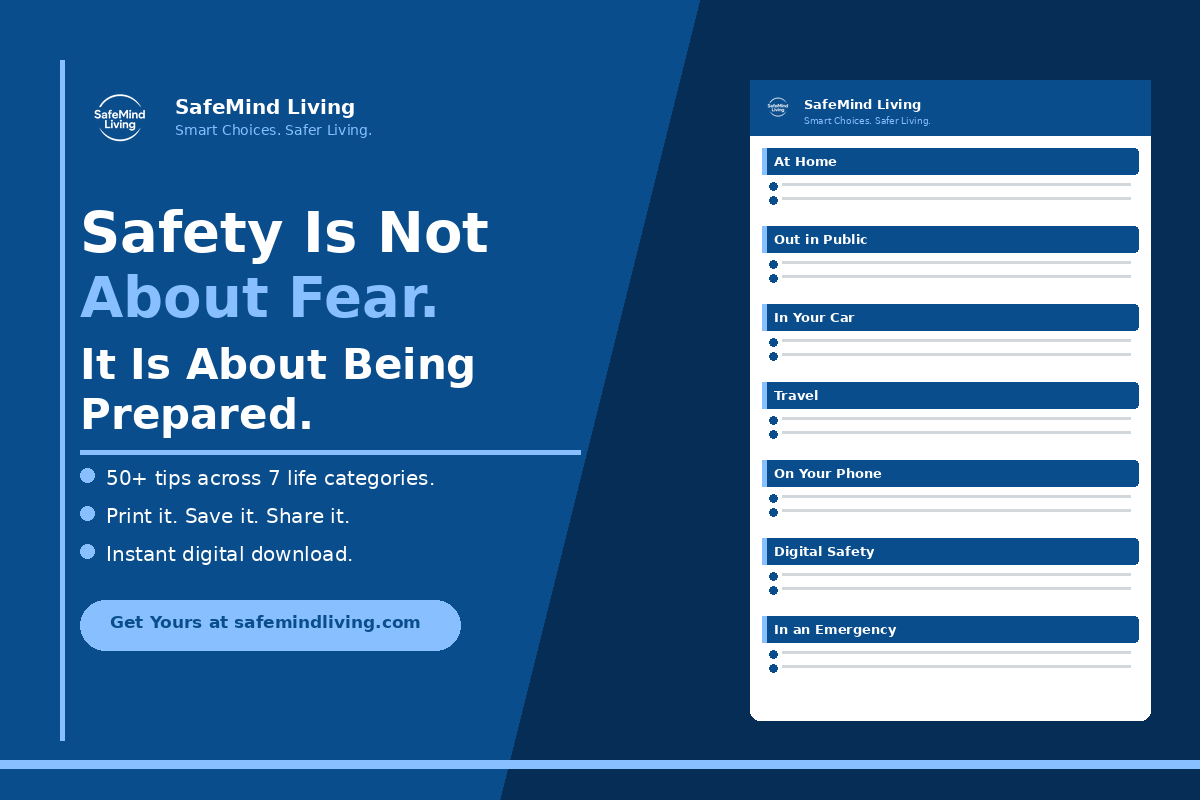
Stay safe and prepared with this comprehensive personal safety guide. Whether you are at home, out in public, traveling solo, or online, this guide gives you more than 50 clear, practical safety tips organized into 7 easy-to-follow categories.
Perfect for women, college students, solo travelers, and families buying for someone they love.
What is inside:
🔒 At Home safety tips
🔒 Out in Public awareness habits
🔒 Car safety essentials
🔒 Travel and solo adventure tips
🔒 Phone and location safety
🔒 Digital and online safety
🔒 What to do in an emergency
🔒 Printable daily safety checklist
Smart. Simple. Print it or save it to your device.
Instant digital download. Print-ready on standard 8.5 x 11 paper.
No results match your search. Try removing a few filters.
